How to Layer Gold Necklaces
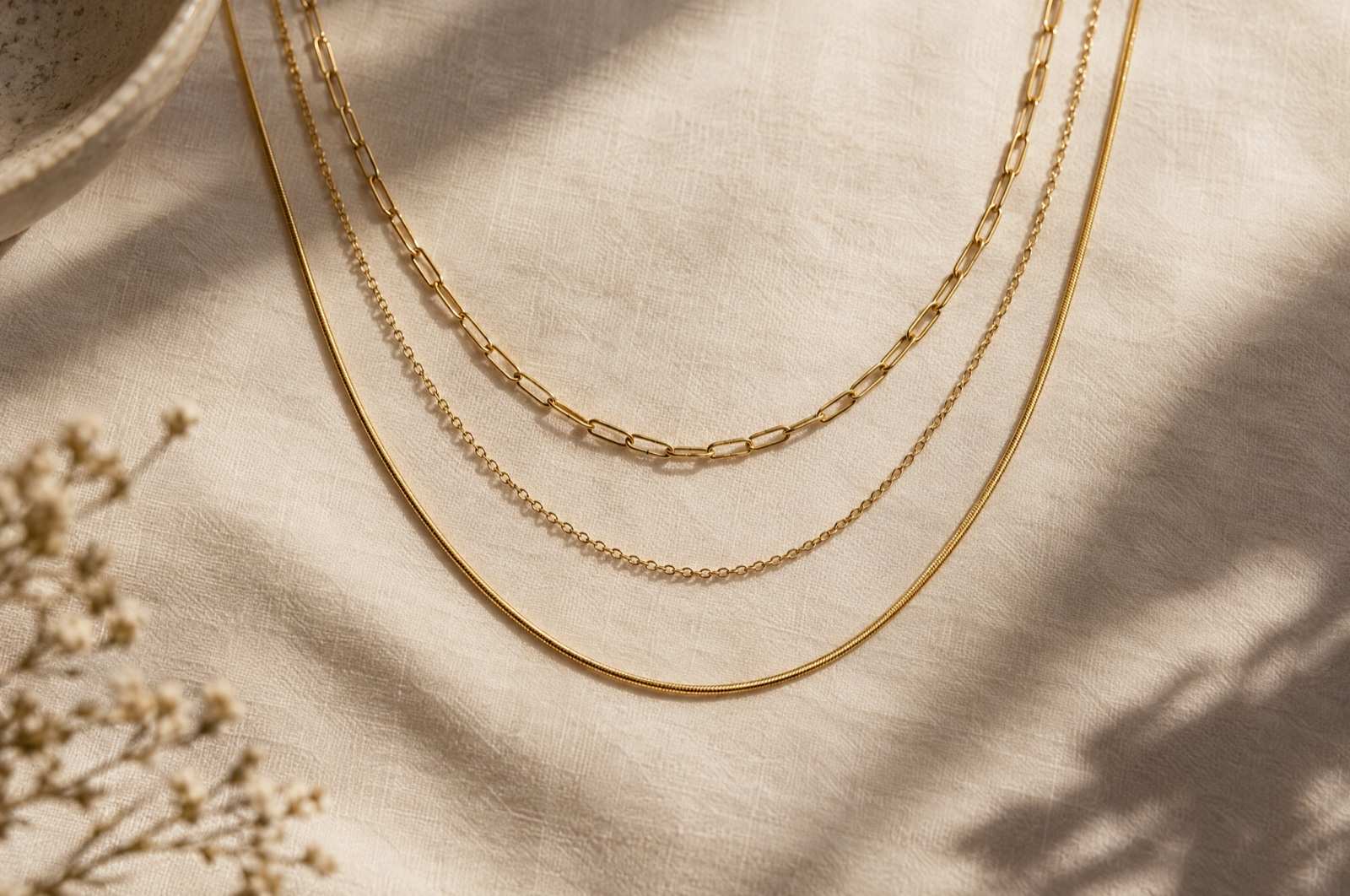
To layer gold necklaces well, space them about two inches apart in length, mix one bold chain with one or two fine ones, and let your neckline decide where they sit. A classic starting point is 16 and 18 inches, or 18 and 20 with a bolder chain on the bottom. If small clasps are a nuisance, choose bigger lobster clasps, an extender, or a clasp converter. That’s most of it.
Good layering comes down to three practical things: know your neckline, don’t fight your clothes, and skip clasps too tiny to work with. This guide is built around those three facts.
Start with lengths
Necklace lengths are measured end to end, clasp included. Where a length sits depends on your neck and build, so use these as rough guides:
| Length | Where it usually sits |
|---|---|
| 16” | At or just on the collarbone |
| 18” | Just below the collarbone. The most common length |
| 20” | A few inches below the collarbone, above the neckline of most tops |
| 24” | Upper to mid chest |
| 30” and up | Lower chest. Good over high necks |
The two-inch rule. Layered necklaces look intentional when there’s visible space between them. Two inches apart is the usual starting point: 16 + 18, 18 + 20, 16 + 18 + 20 for three. If they sit on top of each other, they just look tangled.
Try before you buy. Take a piece of string, hang it round your neck in front of a mirror, and mark where you want each layer to fall. Measure the string. That beats any chart.
Mix chain weights
The easiest layered look has one anchor and one or two supporting chains.
- Fine chains (about 1–1.5 mm). Cable, box, rope. Delicate on their own. They add texture without competing.
- Medium chains (about 2–3 mm). Curb, figaro, small paperclip. Visible from across the room.
- Bold chains (about 4 mm and up). Paperclip, chunky curb, herringbone. These carry the look.
A good rule: put the heaviest chain lowest. It anchors the stack and keeps the fine ones above it from sliding down and tangling. If you prefer the bold piece at the collarbone, keep the longer chains fine.
Two or three layers is plenty. More than that starts to look like a display tray.
Mixing textures
Matching every chain is safe. Mixing is more interesting. A smooth fine cable over a flat paperclip looks considered. Three different textures at three lengths can look busy unless they’re all similar in weight.
Mixing metals
Allowed. If you mix, do it on purpose: repeat each metal at least twice (a gold chain and a gold watch, a silver chain and silver earrings), so it looks chosen.
Pair with your neckline
The neckline decides more than the necklace does.
- Crew neck. Either sit everything above the neckline (16 + 18) or go long over the fabric (24 and up). Avoid lengths that land right on the seam.
- V-neck. The easiest neckline to layer. Let the longest chain follow the V and stop a little above the point.
- Scoop neck. 18 + 20 sits nicely inside the curve.
- Open collar shirt. Fine chains at 16–18 inches, sitting in the opening. A bold chain here can look sharp, especially with the collar turned up.
- Turtleneck or high neck. Go long. One bold chain at 24 inches or more, over the fabric.
- Strapless or wide boat neck. More skin, more room. A three-layer stack works here.
Clasps that are easier on your hands
Tiny spring-ring clasps are fiddly for almost everyone. Some fixes:
- Choose larger lobster clasps. A lobster clasp has a lever you press with your thumb. Bigger ones are much easier to work than spring rings.
- Fasten it in front. Close the clasp under your chin where you can see it, then turn the chain round to the back.
- Use an extender. A 2-inch extender gives you more slack to work with, and lets one necklace sit at two lengths.
- Try clasp converters. Small add-on magnetic clasps fit onto most chains. They’re widely available. Check the weight rating and be aware magnets can let go if a chain is tugged.
- Ask a jeweller. Most can swap a clasp for a bigger one for a modest fee.
- Keep a layering clasp in mind. A multi-strand clasp holds two or three chains at fixed spacing and fastens once. It also helps with tangling.
Stop the tangle
Layered chains tangle. That’s physics. A few habits help:
- Different weights tangle less than three identical fine chains.
- The heaviest chain lowest, as above.
- A layering clasp or separator keeps them apart.
- Store each chain separately, fastened, in a small pouch or hung up.
A starter stack
If you want one formula to try:
- A bold chain at 18–20 inches. This is the anchor.
- A fine chain at 16 inches. It sits above the anchor at the collarbone.
- Optional: a fine pendant at 22–24 inches for V-necks and open collars.
Our bold chain
We make this, so weigh that. The Bold Chain is a 4–5 mm paperclip chain in gold vermeil (925 sterling silver with at least 2.5 microns of gold, nickel-free). It’s 18 inches with a 2-inch extender, so it sits at 18, 20 or anywhere between, and it closes with a lobster clasp. $98.
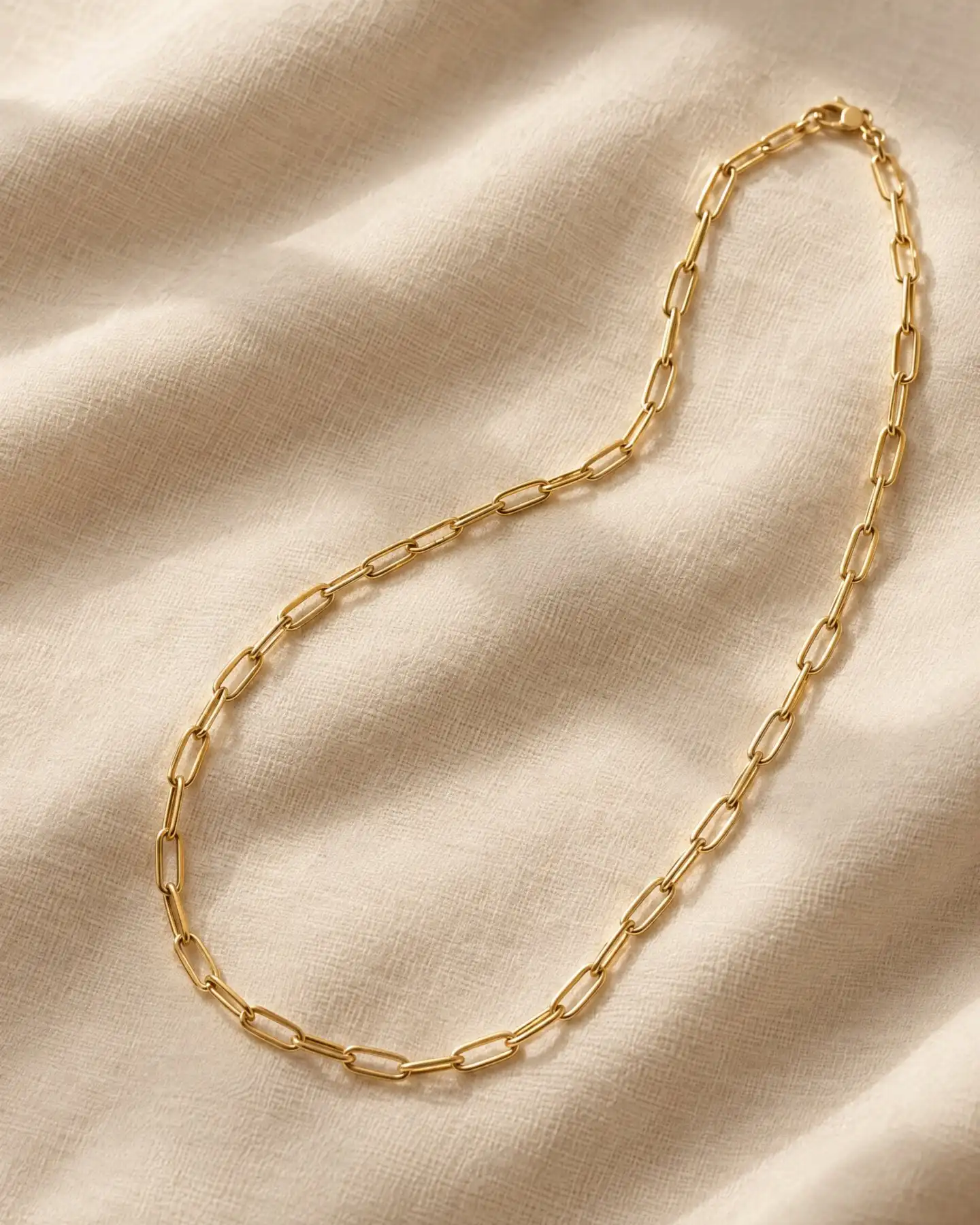
The Bold Chain
A paperclip chain with some weight to it. Wear it alone with a crew neck, or layer it with what you already own.
$98 Pre-order · $0 today · ships by Feb 12
See the Bold ChainIt’s built to be the anchor of a stack. Add a fine chain you already own at 16 inches and you have the starter formula above.
Who it’s not for:
- If you want a whisper-thin chain, this is too bold.
- If you want something to wear in the shower and the pool every day, buy solid gold. Vermeil lasts longer when it comes off for water. We explain why in can you shower in gold vermeil.
- If you have a known silver or gold allergy, check with a dermatologist first.
If you want the chain plus earrings to match, the Golden Hour Set puts the Bold Chain, Dome Hoop and Pearl Drop together in a gift box for $198. It’s also our answer in birthday gifts she’ll actually wear.
Browse everything in our gold vermeil jewelry collection. It’s all on pre-order: $0 today, charged when it ships by February 12, 2027, with 60-day returns.
Sources
How we research and update articles: editorial standards. First published November 19, 2026.