Earrings for Sensitive Ears: Which Metals to Look For
If cheap earrings make your lobes itch, turn red or weep, the usual culprit is nickel. Look for metals with little or no nickel: implant-grade titanium, niobium, platinum, and higher-karat gold are generally well tolerated, and sterling silver often is too, depending on what it’s mixed with. “Nickel-free” is a specific, checkable claim. “Hypoallergenic” sounds similar, but in the US it has no legal definition.
Below: what’s actually going on in your ear, which metals to look for, how to read the labels, and when to stop experimenting and see a dermatologist.
This is general information, not medical advice. If you have a reaction that doesn’t settle, or you’re not sure what you’re reacting to, a doctor is the right person to ask.
What people react to
Most “sensitive ears” are reacting to nickel. The American Academy of Dermatology and the Mayo Clinic both describe nickel allergy as a common cause of allergic contact dermatitis, the itchy, red, sometimes blistered rash that shows up where metal touches skin.
A few things worth knowing:
- It can start at any point. Plenty of women wore costume earrings for years and then, one day, couldn’t.
- It’s often delayed. The reaction can appear a day or two after wearing the piece, which makes it hard to pin down.
- Once it starts, it tends to stay. Mayo Clinic notes that a nickel allergy is generally lifelong once you have it.
- Nickel hides in a lot of places. Cheap jewelry, but also belt buckles, watch backs, bra hooks and some white gold alloys.
Earrings are the worst offenders because the post sits inside the skin of the piercing for hours at a time.
Metals that are generally well tolerated
No metal suits every single person. But these have the best track records for sensitive skin.
Implant-grade titanium
Look for “ASTM F136” or “implant grade”. It’s what many professional piercers use for new piercings. It’s light, strong and contains very little free nickel. The trade-off is style: it comes in silver-grey or anodized colors, and finer jewelry shapes are less common.
Niobium
Similar to titanium in how skin tends to respond. Often anodized into bright colors. Popular with piercers, less common in fine jewelry.
Platinum
Very well tolerated and very durable. Also very expensive. If you want one forever pair and the budget is there, it’s a strong choice.
Higher-karat gold
Gold itself rarely causes trouble. The issue is what it’s mixed with. 18K gold is 75% gold; 14K is about 58%; 10K is about 42%. The lower the karat, the more room for other metals. Yellow gold alloys usually use silver and copper. White gold is the one to watch. Some white gold alloys use nickel for the color. If you buy white gold, ask for a palladium alloy or a nickel-free statement.
Sterling silver (quality varies)
Sterling is 92.5% silver. The other 7.5% is usually copper, which most people tolerate fine. But “925” only tells you the silver content, not what the rest is. Some cheaper alloys and some platings use nickel. Buy from sellers who state what the alloy and any plating contain.
Surgical steel: read the fine print
“Surgical steel” sounds safe, but most stainless steels contain nickel. Some people with sensitive ears do fine in it; some don’t. It isn’t the same as implant-grade titanium, even though the words get used side by side.
“Nickel-free” vs “hypoallergenic”
These two words often appear together. They mean different things.
Nickel-free is a factual claim about what’s in the metal. A seller can test for it and should be able to show you the result. It’s narrow: it tells you about nickel and nothing else.
Hypoallergenic is a marketing word. In the US there’s no legal standard for what a jewelry seller must prove before using it. It roughly means “less likely to cause a reaction”, which could be true or not, and it doesn’t tell you which allergen was considered.
When you shop, our advice is simple:
- Prefer specific claims (“nickel-free”, “implant-grade titanium”, “14K yellow gold”) over general ones.
- Ask what’s under any plating. A gold surface over a brass or nickel layer can still cause trouble once it wears.
- Ask for the test. A seller who has one will usually share it.
What about gold vermeil?
Vermeil is sterling silver with a layer of gold at least 2.5 microns thick, at least 10K. We explain the full definition in what is gold vermeil.
For sensitive ears, vermeil has two things going for it. The surface touching your skin is gold, and the core is silver rather than brass. Two things to check before you buy:
- Is there a nickel layer between the silver and the gold? Some factories use one to help the gold bond. The FTC Jewelry Guides say it should be disclosed if there is.
- What happens when it wears? Over time, the gold layer wears thinner, especially on earring posts. Then the silver underneath touches your skin. If silver is fine for you, that’s fine.
Our pieces, and who they’re not for
We make gold vermeil earrings, so weigh this section knowing that. Our earrings are 925 sterling silver with at least 2.5 microns of gold vermeil, nickel-free. That’s the only claim we make about them for sensitive ears. We’ll post our supplier’s nickel test on Our Gold.
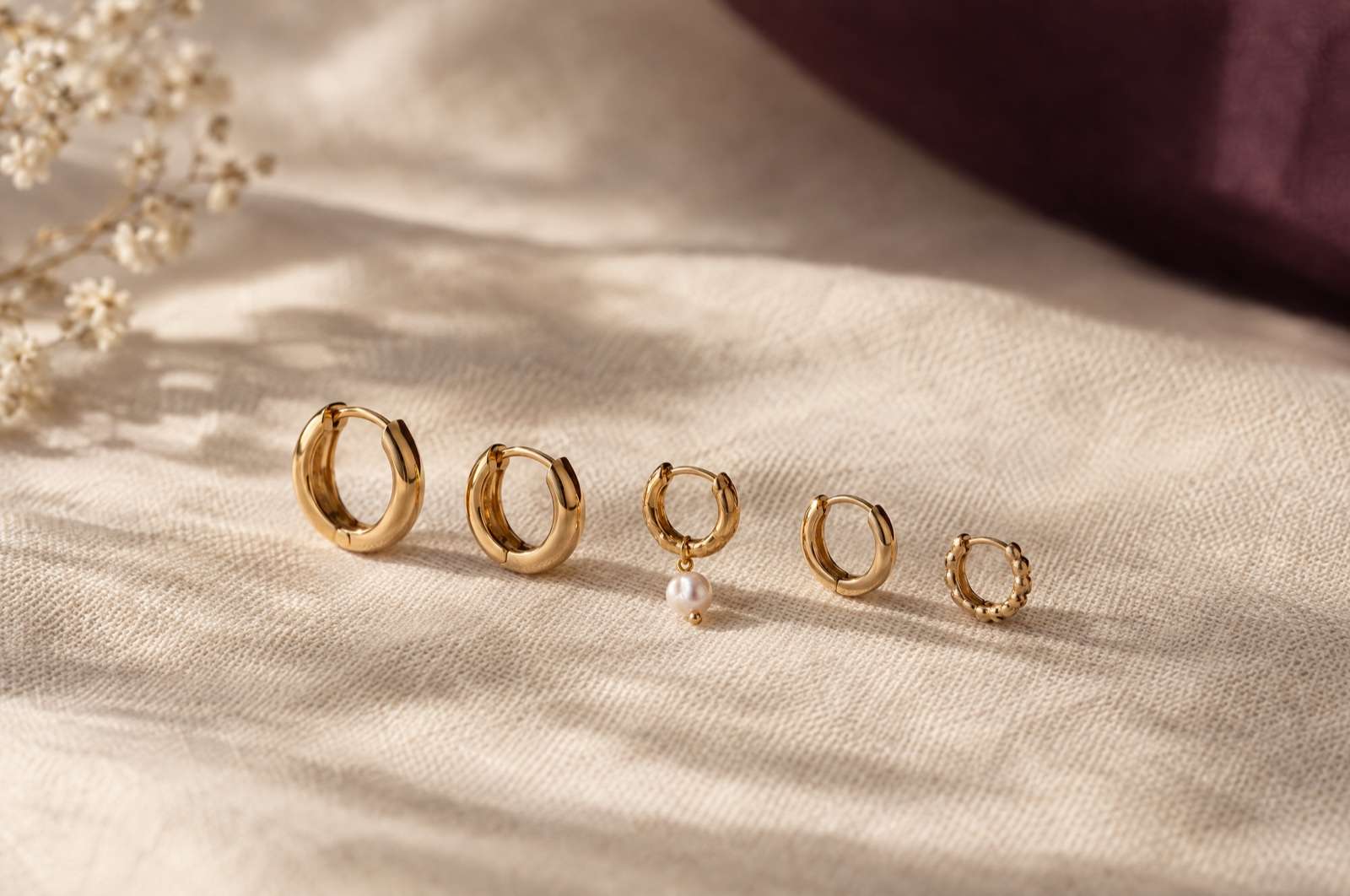
The Pearl Drop is a 12 mm vermeil huggie with a 6–7 mm cultured freshwater pearl. It’s small, light and sits close to the lobe, which some people with tender ears find easier to wear for a full day.
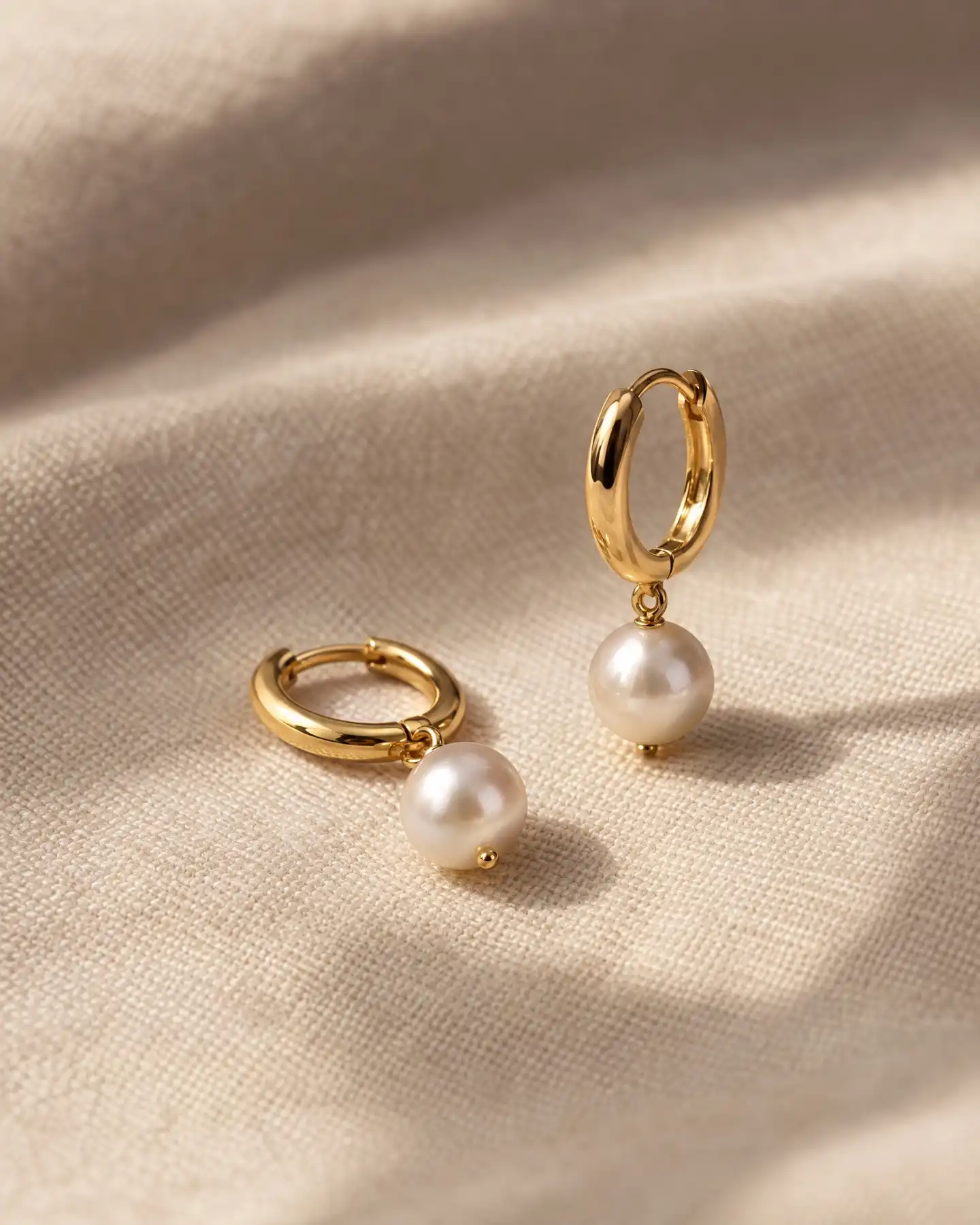
The Pearl Drop
A small cultured freshwater pearl on a close-fitting gold huggie. Plain enough for Tuesday, polished enough for dinner.
$68 Pre-order · $0 today · ships by Feb 12
See the Pearl DropOur pieces are not for you if:
- You know you react to silver or gold. Allergies to these are uncommon, but they exist. Vermeil contains both. See a dermatologist, who can run a patch test and tell you what’s safe.
- You react to “everything” and don’t know why. Same advice. A patch test will tell you more than any product page.
- Your piercing is fresh. New piercings need the jewelry your piercer recommends, usually implant-grade titanium, until they’re fully settled.
A short checklist before you buy
- Check the metal is named specifically, not just “gold tone” or “alloy”.
- For gold, note the karat. For white gold, ask about nickel.
- For plated or vermeil pieces, ask what’s underneath the gold.
- Look for a nickel-free claim with a test behind it.
- Check the return window, so you can try a pair for a few days.
- If your skin reacts, take the earrings out and talk to a dermatologist. Don’t push through it.
Shapes that help
Metal matters most, but shape helps too. Huggie earrings sit close to the ear with a short post or hinge. There’s less weight pulling on the hole and less metal sitting inside it. Our guide to the best gold huggie earrings covers sizes and closures.
You can see our nickel-free huggies in the gold huggie earrings collection. They’re on pre-order now: $0 today, charged when they ship by February 12, 2027, with 60-day returns.
Sources
How we research and update articles: editorial standards. First published November 12, 2026.